
Plan critical thinking activities that work in whole-class discussion, small groups, stations, and independent practice. Use it alongside the Critical Thinking Guides, then adapt the examples with the Create Critical Thinking Exercises.
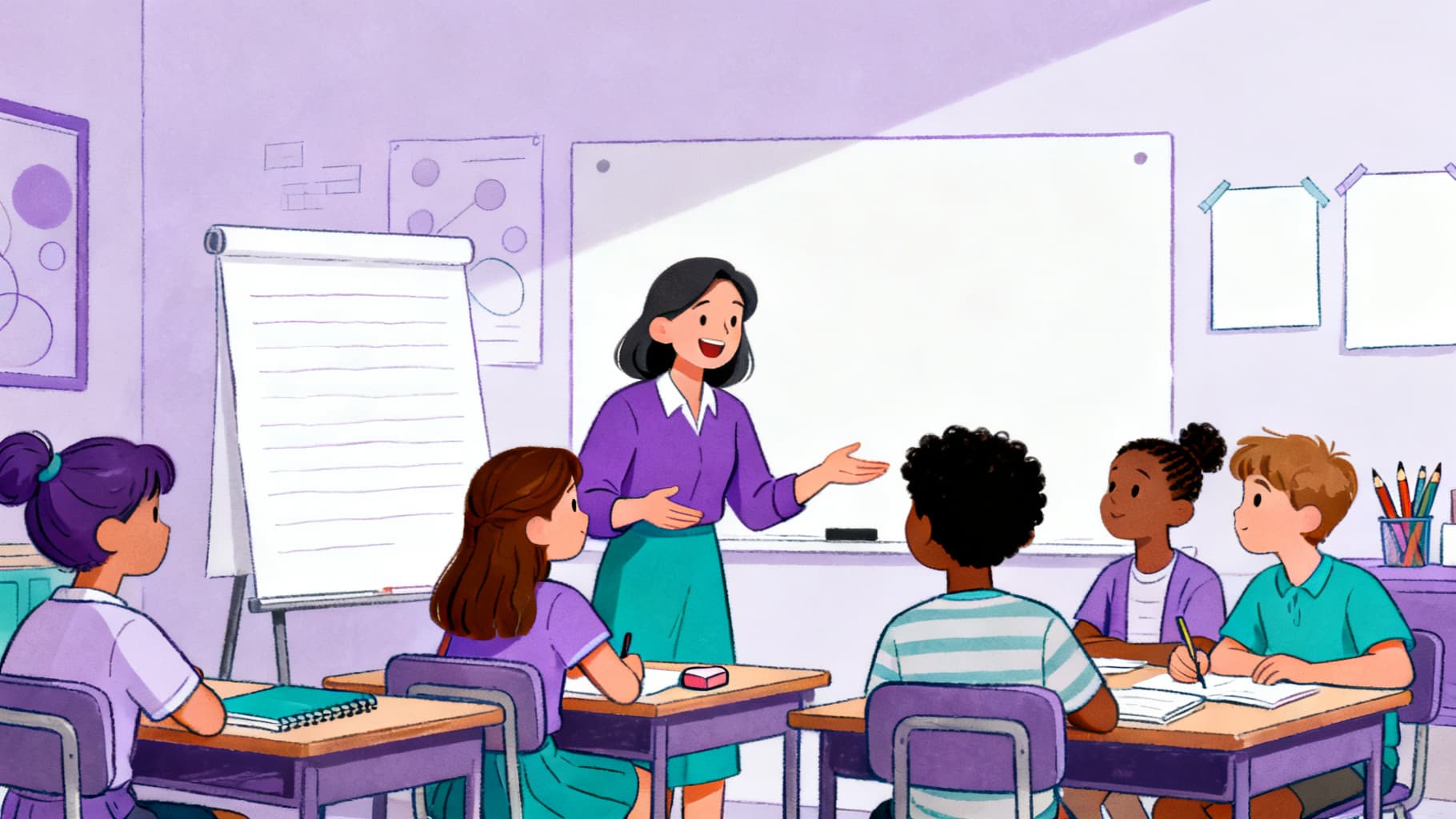
Designing Activities That Require Genuine Thinking
A critical thinking activity must create a situation where students cannot succeed by memorizing or guessing. The activity should present a problem, dilemma, or question where the path to a good answer requires analyzing information, weighing alternatives, and constructing a reasoned response.
The best activities feel like puzzles worth solving. Students should experience productive struggle — the challenge should be difficult enough to require effort but achievable enough to prevent frustration.
Whole-Class Discussion Activities
Structured discussions develop critical thinking when they require students to respond to each other's reasoning, not just share opinions in sequence. Use protocols like Socratic Seminar, Philosophical Chairs, or Four Corners where students must take positions, cite evidence, and respond to counterarguments.
Set discussion norms that reward reasoning quality: "I agree with Maya because..." or "I see it differently because the evidence shows..." These sentence structures make thinking visible and hold students accountable to evidence.

Small Group and Partner Activities
Pair activities work well for critical thinking because students must articulate their reasoning to someone else. Try Think-Pair-Share with analytical questions, collaborative source evaluation where partners must agree on a credibility rating, or argument mapping where pairs diagram the structure of a text's reasoning.
- Devil's Advocate: One partner argues for a position, the other must find the strongest counterargument
- Evidence Ranking: Partners rank five pieces of evidence from strongest to weakest and justify their order
- Assumption Hunting: Pairs identify three unstated assumptions in a short argument
- Perspective Switch: Partners argue one side, then switch and argue the opposite with equal conviction
Independent Practice Activities
Independent critical thinking activities build self-regulation — the ability to monitor and improve one's own reasoning without external prompts. Journaling with analytical prompts, self-assessment against reasoning criteria, and revision of previous work based on new evidence all develop this metacognitive capacity.
Start with structured independence (clear prompts, defined criteria) and gradually increase openness as students internalize reasoning habits.
Helpful Related Resources
Related guide
Critical Thinking Exercises for Students
Use flexible critical thinking exercises for students that support evidence, reasoning, discussion, and reflection.
Read guide →Related guide
Critical Thinking Activities for Adults
Use critical thinking activities for adults in workplace learning, media literacy, civic discussion, and personal decision-making.
Read guide →Related guide
Critical Thinking Questions for Students
Write critical thinking questions that move students beyond recall into explanation, comparison, evaluation, and transfer.
Read guide →Related guide
Critical Thinking Worksheets for Teachers and Parents
Create critical thinking worksheets that combine short scenarios, source evaluation, reasoning stems, and reflection prompts.
Read guide →Sources and Further Reading
- WebQuest.org: Creating WebQuests: Original WebQuest community resource associated with Bernie Dodge.
- ERIC: Problem-Based Learning: What and How Do Students Learn?: Educational Psychology Review article record for Hmelo-Silver (2004).
- Cambridge Handbook of the Learning Sciences: Project-Based Learning: Krajcik and Shin chapter on project-based learning.
- Library of Congress: A Taxonomy for Learning, Teaching, and Assessing: Library of Congress record for Anderson and Krathwohl's revised Bloom taxonomy.
Ready to build your own?
Generate critical thinking questions, hints, worksheets, and private guidance, then customize the exercise for your class.