
Use ethical reasoning scenarios to help students weigh values, stakeholders, consequences, fairness, and responsible choices. Use it alongside the Critical Thinking Guides, then adapt the examples with the Create Critical Thinking Exercises.

Why Ethical Reasoning Belongs in Every Classroom
Ethical reasoning is not philosophy for its own sake — it is a practical skill students use daily. Should I share this information? Is this fair? What do I owe others? Students face genuine ethical decisions about honesty, loyalty, fairness, and responsibility. Structured scenarios give them practice thinking through these decisions before the stakes are high.
Ethical reasoning exercises also build empathy and perspective-taking. When students must consider how a decision affects multiple stakeholders, they develop the habit of thinking beyond their own immediate interests.
Designing Scenarios That Produce Genuine Dilemmas
An effective ethical scenario creates tension between two legitimate values. If one option is obviously right, there is no dilemma and no reasoning practice. The best scenarios make students feel pulled in two directions.
- Honesty vs. Loyalty: Your friend copied homework. The teacher asks if you know who cheated. What do you do and why?
- Individual freedom vs. Group welfare: Should students be required to wear uniforms if it reduces bullying but limits self-expression?
- Fairness vs. Need: Your team has one scholarship recommendation. One member has the best grades; another has the greatest financial need. How do you decide?
- Privacy vs. Safety: Should parents read their teenager's text messages if they suspect dangerous behavior?
- Short-term vs. Long-term: A factory provides jobs but pollutes the river. Should it stay open?
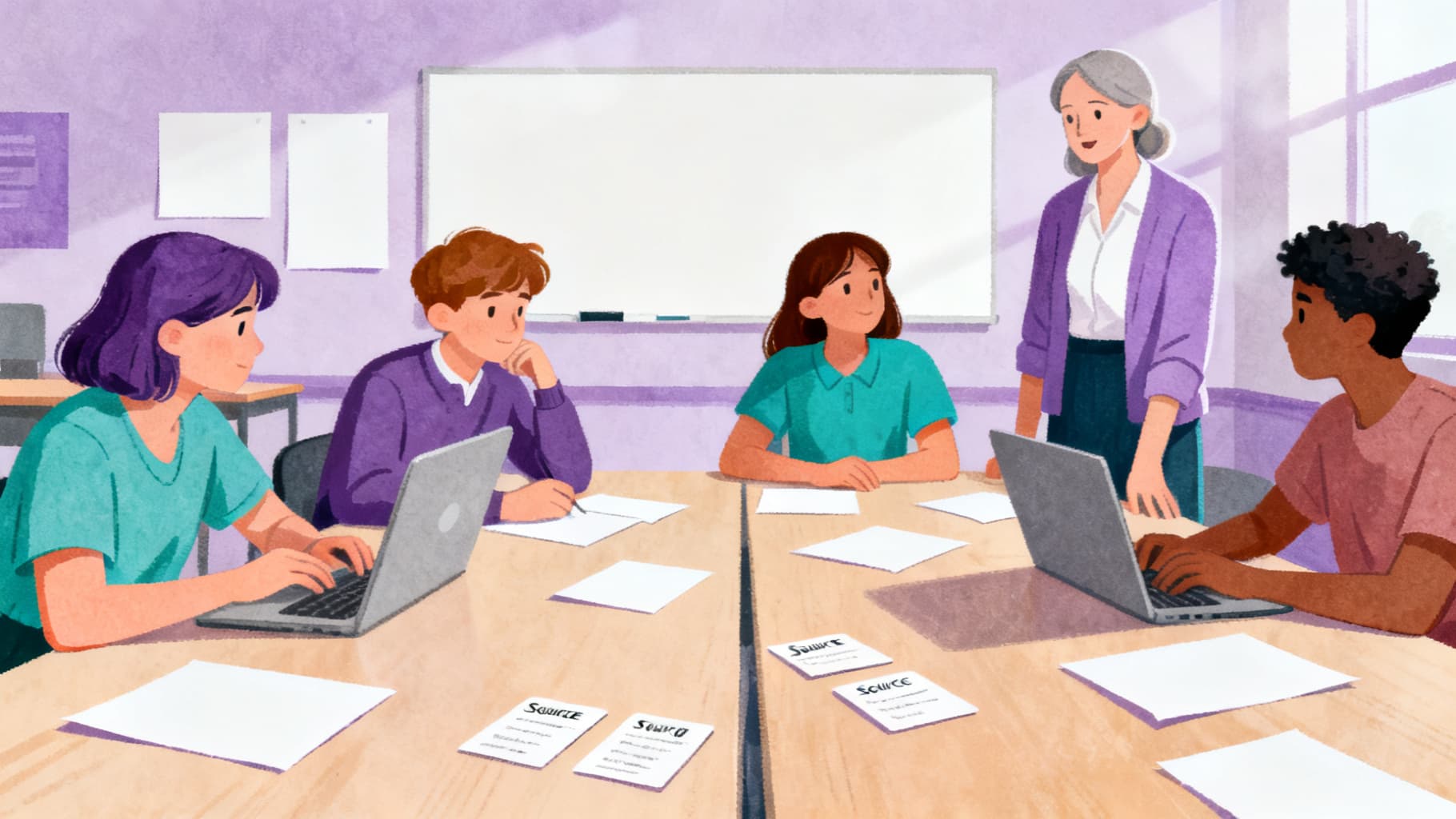
Facilitating Ethical Discussions Without Imposing Answers
Your role is to guide the reasoning process, not to reveal the "correct" answer. Ask students to identify the values in conflict, consider consequences for all stakeholders, apply principles consistently, and acknowledge what they are sacrificing regardless of their choice. A good ethical discussion leaves students more thoughtful, not more certain.
Establish norms: respect for different conclusions, requirement for reasoning (not just opinions), and willingness to revise positions when presented with new considerations.
Connecting Ethical Reasoning to Current Events
Use real-world ethical dilemmas from news, technology, and policy. Should AI companies be liable for harmful outputs? Is it ethical to use facial recognition in schools? Should social media have age restrictions? These questions connect abstract ethical reasoning to concrete decisions students and society face right now.
Helpful Related Resources
Related guide
Critical Thinking Exercises for Students
Use flexible critical thinking exercises for students that support evidence, reasoning, discussion, and reflection.
Read guide →Related guide
AI Bias Critical Thinking Questions
Use AI bias critical thinking questions to help students examine training data, fairness, representation, and responsible AI use.
Read guide →Related guide
Compare Arguments Questions for Critical Thinking
Use compare arguments questions to help students evaluate claims, evidence, assumptions, counterclaims, and reasoning quality.
Read guide →Related guide
Critical Thinking Worksheets for Teachers and Parents
Create critical thinking worksheets that combine short scenarios, source evaluation, reasoning stems, and reflection prompts.
Read guide →Sources and Further Reading
- WebQuest.org: Creating WebQuests: Original WebQuest community resource associated with Bernie Dodge.
- ERIC: Problem-Based Learning: What and How Do Students Learn?: Educational Psychology Review article record for Hmelo-Silver (2004).
- Cambridge Handbook of the Learning Sciences: Project-Based Learning: Krajcik and Shin chapter on project-based learning.
- Library of Congress: A Taxonomy for Learning, Teaching, and Assessing: Library of Congress record for Anderson and Krathwohl's revised Bloom taxonomy.
Ready to build your own?
Generate critical thinking questions, hints, worksheets, and private guidance, then customize the exercise for your class.