
Explore WebQuest examples across subjects and grade bands, with guidance for adapting each example to your classroom. Use it alongside the WebQuest Guides, then adapt the examples with the Generate a WebQuest.
What Makes a Good WebQuest Example
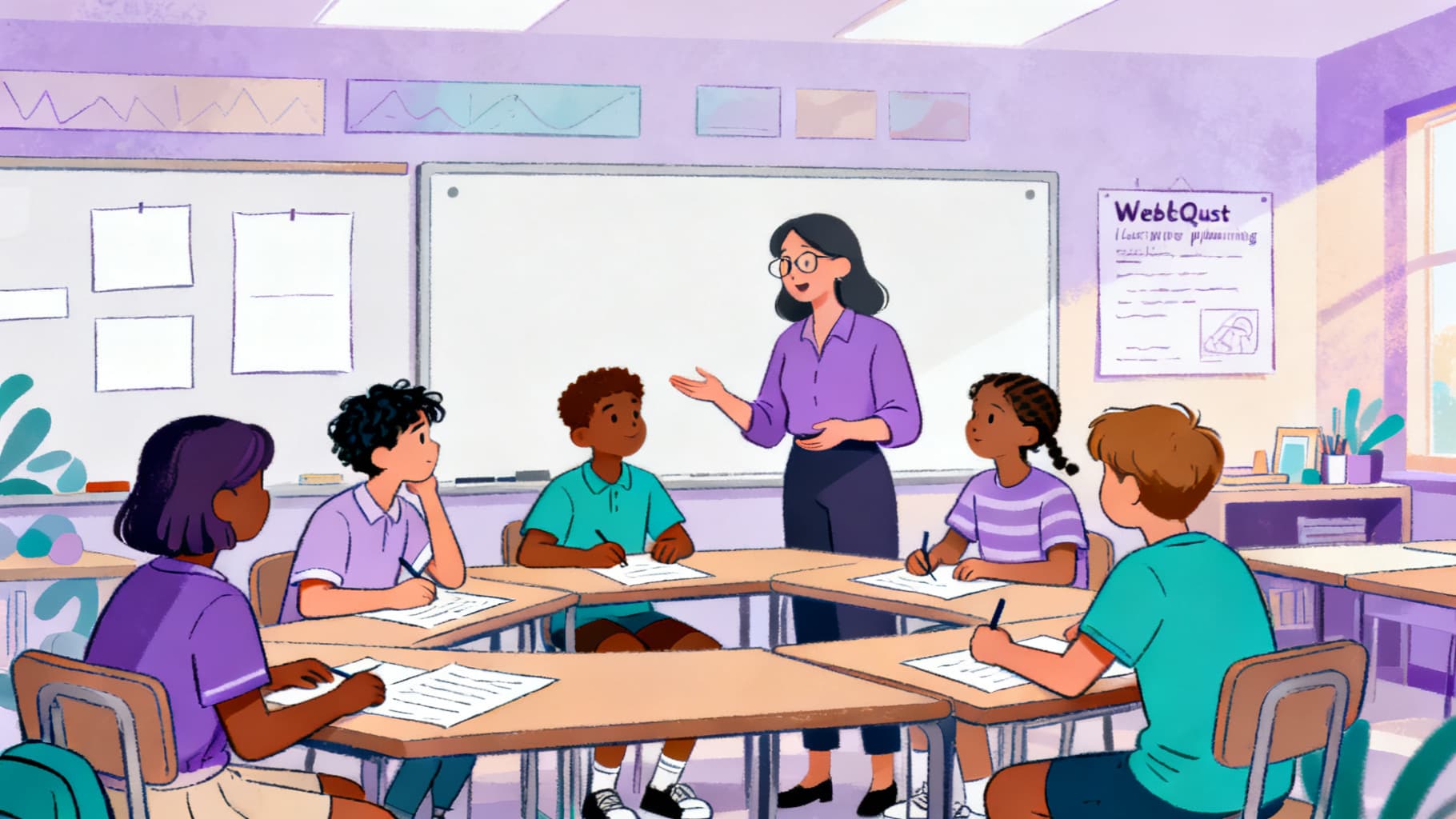
A strong WebQuest example shows how the six components work together around a specific topic. The best examples have a question that genuinely requires investigation, resources that offer different perspectives, and a task that asks students to take a position or create something original.
When reviewing examples, look for tasks that go beyond "make a poster about X." Effective examples ask students to compare, recommend, debate, design, or solve a problem using evidence from curated sources.
Elementary WebQuest Examples (Grades 3-5)
At the elementary level, WebQuests work best with concrete topics and structured note-catchers. An example for grade 4 science might ask: "Which animal adaptation would help you survive best in the Arctic?" Students research three animals, compare their adaptations, and write a persuasive paragraph defending their choice.
Keep elementary WebQuests to one or two class periods. Provide sentence frames, vocabulary support, and a simple graphic organizer for collecting evidence from each source.
Middle School WebQuest Examples (Grades 6-8)
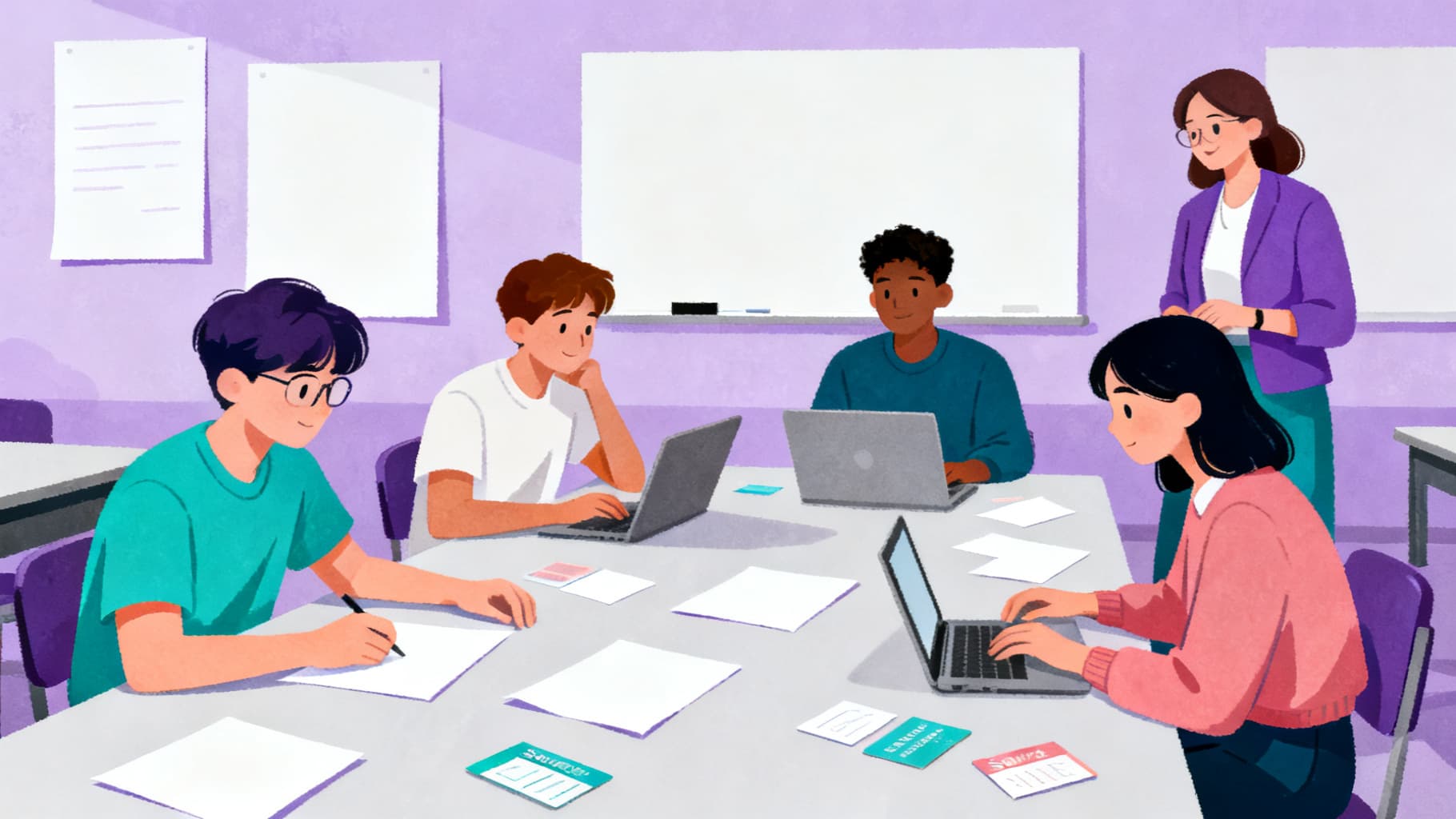
Middle school students can handle more complex questions and longer investigations. A social studies example might ask: "Was the Louisiana Purchase a fair deal for all parties involved?" Students examine perspectives of Jefferson, Napoleon, Native nations, and settlers before writing a multi-paragraph argument.
At this level, add a source evaluation step where students assess credibility before using information in their final product.
High School WebQuest Examples (Grades 9-12)
High school WebQuests should mirror authentic research tasks. An economics example might ask students to analyze whether a proposed minimum wage increase would help or harm their local community, using Bureau of Labor Statistics data, news articles, and economic research summaries.
Expect students to address counterarguments, cite sources formally, and present findings in a format appropriate to the discipline — a policy brief, lab report, or annotated bibliography.
Adapting Examples to Your Classroom
No example will fit your classroom perfectly. Use published examples as structural models, then swap in topics relevant to your curriculum, resources appropriate for your students' reading levels, and tasks aligned to your learning objectives. The structure transfers even when the content changes completely.
Helpful Related Resources
Related guide
WebQuest Template for Teachers: Structure, Sections, and Examples
Use a practical WebQuest template to organize introduction, task, process, resources, evaluation, conclusion, and teacher notes.
Read guide →Related guide
Social Studies WebQuest Topics Students Can Explore
Find social studies WebQuest topics about civics, geography, economics, culture, and historical decision-making.
Read guide →Related guide
What Is a WebQuest? A Simple Guide for Teachers
A clear teacher-friendly explanation of what a WebQuest is, how it works, and why it supports research, collaboration, and critical thinking.
Read guide →Related guide
The 6 Essential Parts of a WebQuest
Understand the essential parts of a WebQuest and how each section supports student inquiry and classroom management.
Read guide →Sources and Further Reading
- WebQuest.org: Creating WebQuests: Original WebQuest community resource associated with Bernie Dodge.
- ERIC: Problem-Based Learning: What and How Do Students Learn?: Educational Psychology Review article record for Hmelo-Silver (2004).
- Cambridge Handbook of the Learning Sciences: Project-Based Learning: Krajcik and Shin chapter on project-based learning.
- Library of Congress: A Taxonomy for Learning, Teaching, and Assessing: Library of Congress record for Anderson and Krathwohl's revised Bloom taxonomy.
Ready to build your own?
Start with a structured WebQuest draft, then customize the resources, rubric, and student questions for your class.